
AI Worlds for Creative Writing
Creative writing students use World Labs’ "Marble" to transform prose into immersive 3D environments
The Project
This project explores the intersection of Spatial Computing and Narrative Craft. Using World Labs’ "Marble", I worked with English Language and Creative Writing students to move beyond the blank page and into three-dimensional space.
By generating interactive, 3D environments from text-based prompts, students were able to "scout" their fictional locations, solving complex problems of spatial logic, atmosphere, and sensory detail before ever writing a line of prose.
The Challenge
Creative writers often struggle with the "white room" syndrome descriptions that feel flat or spatially inconsistent. Traditional image generators offer a single perspective, but they don't allow a writer to understand the scale of a room or what a character sees when they turn a corner. The challenge was to provide a tool that allowed for environmental immersion to inspire more "lived-in" and grounded storytelling.
The Process
We conducted a series of "Spatial Storyboarding" sessions where students used generative 3D technology to build three distinct types of worlds:
Atmospheric Interiors: One student focused on the "lived-in" mess of a space (e.g., an Alchemist's Attic) to find sensory anchors like lighting and clutter. See their space below:
https://marble.worldlabs.ai/world/b2cb6b57-163a-4448-9738-8d726e1803cc
Scale & Architecture: Another student focussed on creating a vast courtyard to understand physical distance, helping them plan action sequences and character movements. See thier space below:
https://marble.worldlabs.ai/world/739a79c5-b3db-4d5b-81bd-ea14ff466633
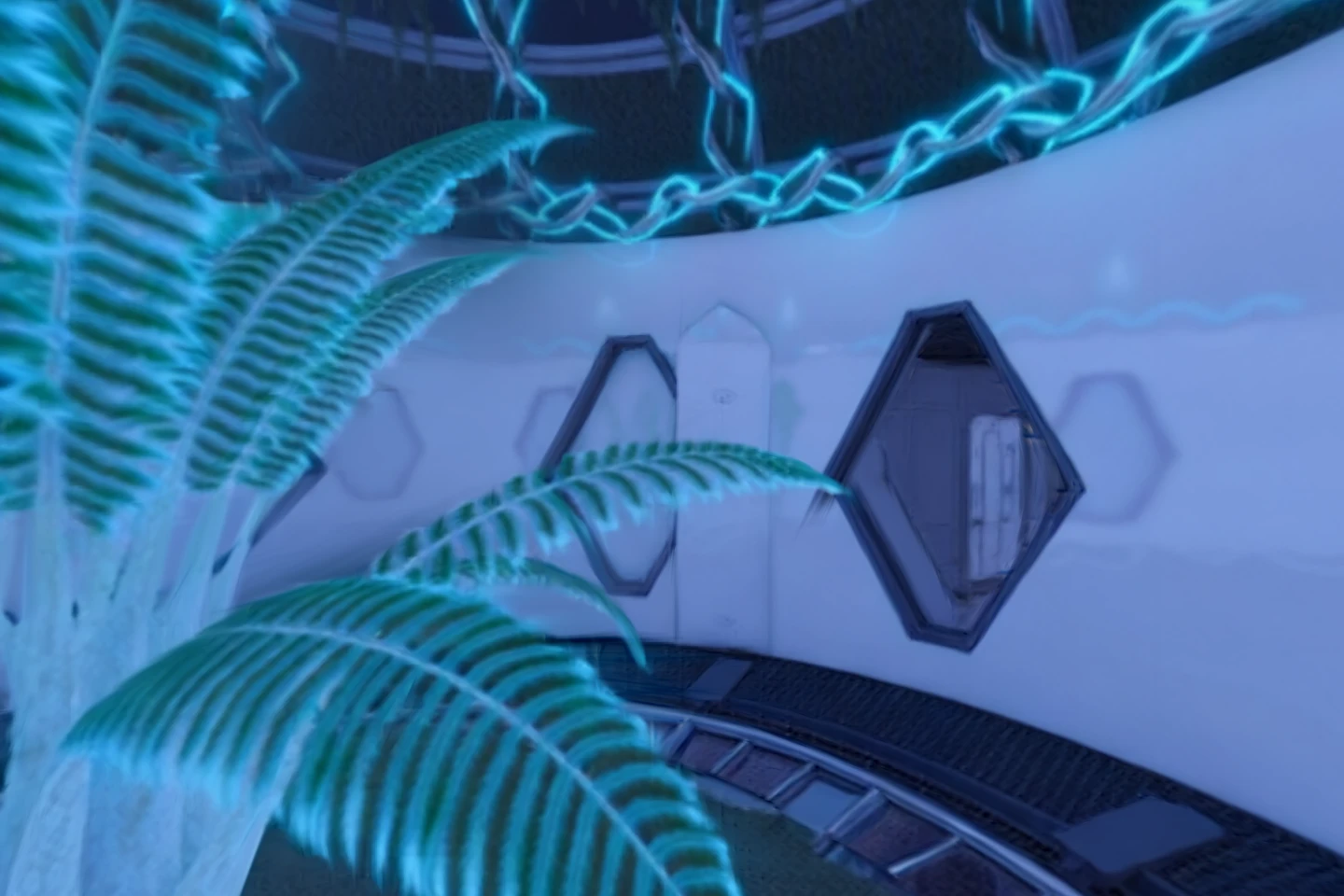
Genre-Mashing: Another student blended disparate aesthetics ( Bio-luminescence and High-Tech) to create a visual "style-key" for consistent world-building. See their space below:
The Impact
Spatial Reasoning: Students mentioned they were able to have a better understanding of their characters' physical constraints within a scene.
Sensory Depth: By "walking" through their generated worlds, students identified small details such as 'a hidden corner' and the cluttered feeling of a space, which were able to become plot relevant points.
Digital Literacy: Enlgish Language students engaged with cutting-edge "Spatial Intelligence" AI, demystifying the technology and seeing it as a collaborative partner rather than a replacement for creativity.
Technology Used
World Labs (Marble): For generating high-fidelity, interactive 3D spatial environments.
Generative AI Prompting: Refining descriptive language to produce accurate spatial outputs.
Project Gallery


